
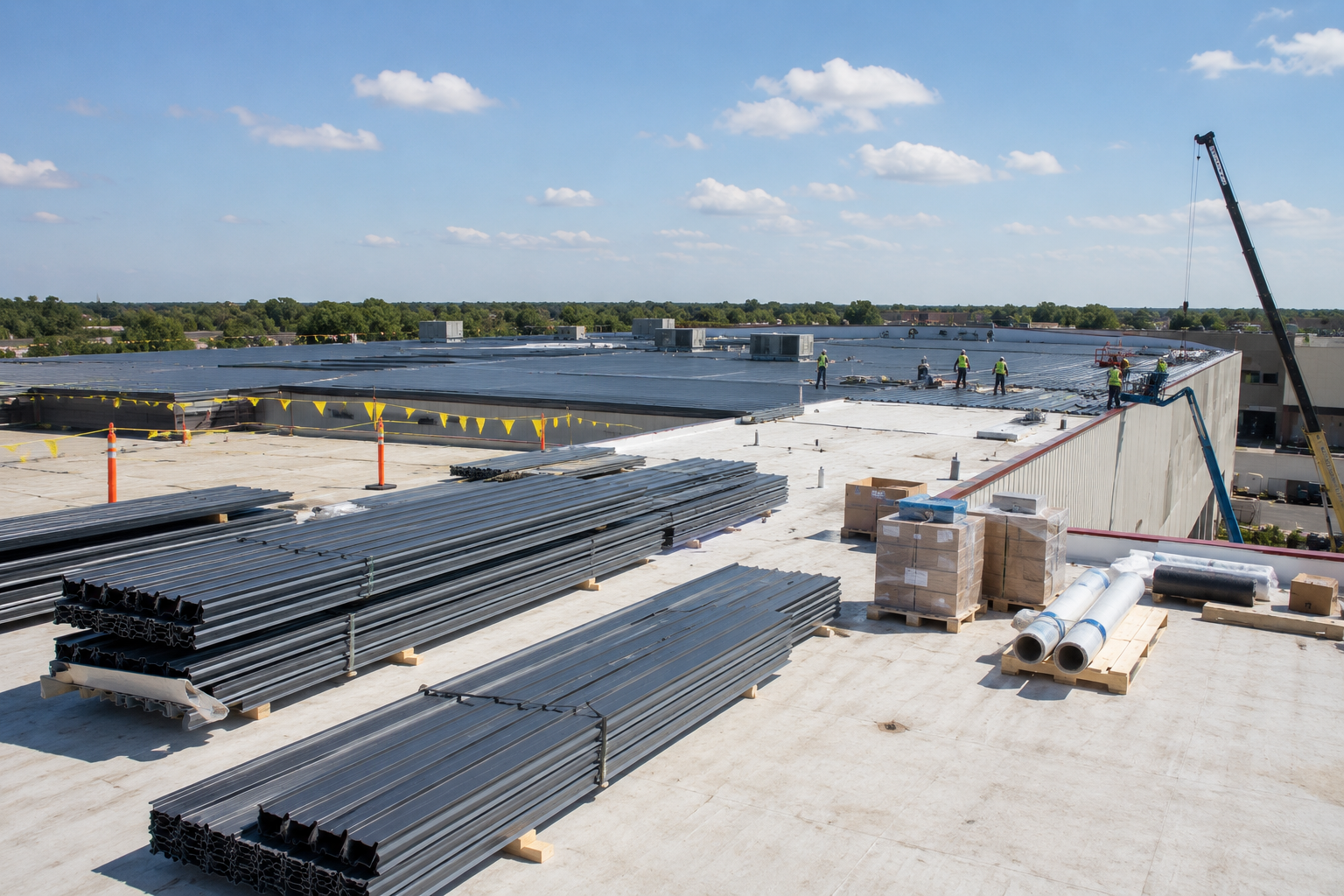
Metal roofing is growing in popularity, especially for commercial buildings. You can see it everywhere, from warehouses to retail buildings to offices to workshops to agricultural businesses, and plenty of other commercial facilities.
Selecting a metal roofing system, though, involves more than picking panels and a color. Contractors need to think through the building itself, the roof design, material specifications, installation requirements, and what the owner expects from the roof over the long haul. Here are five considerations contractors should review when planning metal roofing for commercial buildings in Anderson, SC.
1. Consider How the Building Will Be Used
Start with the purpose and design of the commercial property, because how a building functions shapes what its roof needs to do. Roofing requirements can vary between these building types.
- Warehouses and distribution facilities
- Retail properties
- Offices
- Manufacturing or workshop spaces
- Agricultural or mixed-use commercial buildings
A conditioned office building has different insulation and ventilation needs than an unconditioned storage barn, and that difference affects the roofing system. Rooftop equipment matters too. HVAC units, vents, skylights, and other penetrations all change how the roof goes together and what accessories the job requires. When contractors understand how the property functions day to day, it becomes much easier to determine which roofing materials and components make sense for the project.
2. Compare Metal Panel Profiles
Different commercial projects require different panel systems. The two most prevalent kinds are standing seam and exposed fastener panels. Standing seam panels are available with concealed fasteners, so screw heads are not on the roof surface. They are often chosen when attractiveness and long-term commercial performance are important.
Exposed fastener panels are attached with visible screws and are generally utilized for agricultural, storage, workshop, and some commercial applications where cost and speed of installation are more important. Roof slope, building design, budget, and project parameters can determine the type of panel system that will work for the job.
Check the manufacturer’s specifications and any construction standards that apply to the project before you decide.
3. Look at Gauge, Coatings, and Finishes
Not all metal roofing panels carry the same specifications, and the details matter on commercial work. Contractors may need to evaluate several factors before ordering.
- Metal thickness or gauge
- Paint and coating systems
- Available finishes
- Color
- Manufacturer warranties
On many commercial projects, the specifications already dictate some of these choices, so read the project documents carefully. Local conditions play a role as well. Anderson’s climate brings hot summers, strong sun exposure, and heavy rain, and materials should be selected with those conditions in mind.
Match the product specifications to the particular application instead of relying on the same material for every project. A panel that works fine on a small workshop may fall short of what a large commercial spec demands.
4. Calculate the Entire Material Order
A commercial metal roof is a complete system, not just a stack of panels, and the material order should reflect that. Beyond panels, a commercial roofing project may require trim and flashing, ridge caps, fasteners, closures, sealants, underlayment, and other project-specific accessories.
Accurate measurements and takeoffs are the foundation of the order. Account for roof penetrations, valleys, transitions, and other design details, since each one adds material that the base measurements will not capture. Review the complete order against the plans before anything is purchased.
That single review can prevent shortages that stall the crew, excess material that wastes money, and jobsite delays that push back the schedule.
5. Think About Ordering and Project Scheduling
Material planning and the construction schedule go hand in hand, especially on commercial work. Before the project ramps up, contractors should confirm several details with their supplier.
- Material availability
- Production or lead times
- Custom panel lengths
- Delivery arrangements
- Where materials will be stored upon arrival
These details carry extra weight on larger commercial projects, where a single missing component can hold up multiple crews or entire phases of work. A delayed ridge cap on a small job is an annoyance.
On a commercial build with trades stacked behind the roofer, it can throw off the whole timeline. Coordinate material needs early rather than waiting until installation is around the corner.
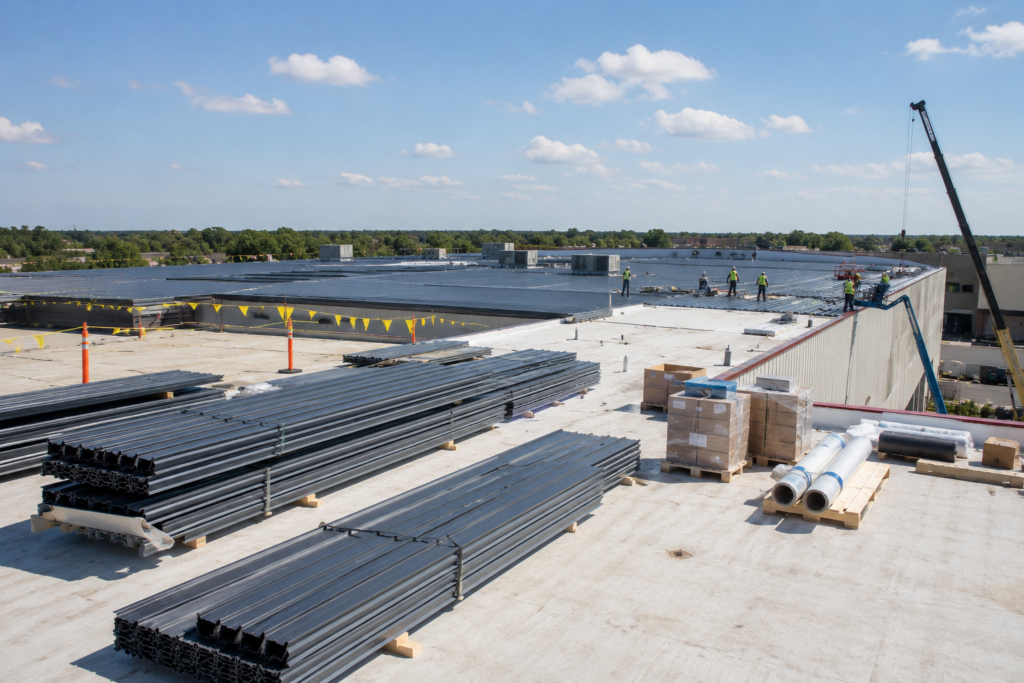
Plan Your Commercial Metal Roofing Order
Reducing material waste starts long before installation day. Accurate measurements, careful ordering, planned cuts, proper handling, and honest reviews of past jobs all work together to keep more of your material on the roof and out of the dumpster. If up to 30% of delivered materials are being thrown away on the average building site, the contractors who tighten up their process gain a real edge on cost and cleanup.
The right supplier makes each of those steps easier. Metal roofers in Greenville, SC who need panels, trim, and accessories, or a hand preparing material orders for an upcoming project, can reach out to Upstate Metal Supply to get started.